

Following my previous post, I’d like to explain whether you are actually a good candidate to achieve noticeable results from a facelift.
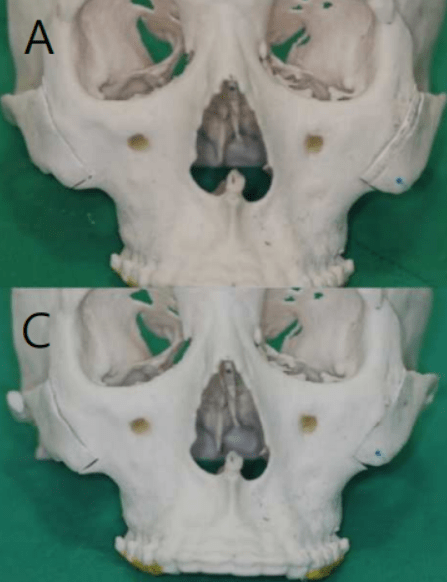
Patients who tend to see the best results from a facelift in the first group are those who have previously undergone facial contouring surgery (cheekbone reduction, jaw angle reduction, chin surgery) or liposuction procedures (front cheeks, nasolabial folds, buccal fat, double chin).
People who have undergone these procedures are most commonly in their 30s and 40s.
Facial contouring surgery refers to procedures within plastic surgery that reshape or reduce the facial bones, such as cheekbone reduction, jaw angle reduction, or chin surgery.
Facial liposuction, on the other hand, involves removing unwanted fat deposits in areas such as the front cheeks, cheek area, jowls, and double chin, helping to refine and slim the face.
In these patients, the results of a facelift tend to be much more dramatic (compared to those who have not undergone such procedures). In other words, they become ideal candidates for a successful facelift.
Let’s take a closer look at why this is the case.
Do you remember the “rubber glove” analogy I explained in a previous post?

If you put on a rubber glove that is too large for your hand, the fingers will look wrinkled and the glove itself will not sit smoothly.
Even if you forcefully stretch it to fit your hand, the moment you release it, it tends to wrinkle again. And if you pull it too aggressively, the glove may become overstretched or even tear.
So the key point was that when performing a facelift to improve a sagging, wrinkled face, it is not simply about “pulling things tight.”
This is essentially the exact opposite—the polar opposite—of the procedures I mentioned earlier: facial contouring and facial liposuction. They are literally the reverse situation.
In this case, the rubber glove is too small, while the hand is too large.
“Having a large hand” in this analogy means a hand that looks big and bulky, like a man’s hand with a naturally thick bone structure prominent, strong, and somewhat rugged in appearance.

[Arm-wrestling champion’s hand]
Conversely, someone may also have a “large hand” not because of big bones, but because of excess soft tissue or swelling.
In other words, the hand can look large due to fullness or puffiness rather than skeletal structure.

[Looks large because of swelling or soft tissue fullness]
In other words,
a “bony large hand” corresponds to someone with prominent cheekbones or a wide jawline.
A “plump hand,” on the other hand, corresponds to someone with fullness in areas such as the front cheeks, buccal fat pads, or double chin.
This analogy should make the concept easier to understand.
However, regardless of whether the hand becomes larger due to bone structure or soft tissue, as I mentioned in the previous post, once the hand exceeds a certain size, there is a curious phenomenon where the rubber glove (representing the skin) seems to adapt and expand in response, almost as if it can generate the additional surface area needed to accommodate the change.

The skin stretches to match the shape of the hand.
But!
When someone with prominent cheekbones, a wide jaw, or a strong chin undergoes facial contouring surgery to reduce bone volume, or
사진
when someone with a bulky double chin or excess fat that blurs the jawline undergoes liposuction to refine those areas,
사진
What happens is this: the “hand inside” becomes smaller, but the stretched rubber glove (the skin) remains.
So what happens to the over-expanded glove?
These procedures reduce the “hand” inside, but they do not reduce the outer “glove.”
The glove has already been stretched to fit a larger hand, so even after the hand becomes smaller, what remains of the rubber glove will naturally become loose and wrinkled again.
사진
So does that mean their face will end up becoming wrinkled and sagging like someone who needs a facelift?
If that’s the case, does it mean these procedures should not be performed at all?
Fortunately, that is not the case. Because of the second characteristic of the skin that I will explain next, these procedures are not only acceptable, but are also commonly performed today.
This second property of the skin is something I learned extensively during my plastic surgery training at a university hospital. Before we move on, let’s briefly revisit the first characteristic.
Do you remember?
The first characteristic was:
“Skin responds to being pulled by stretching.”
The second characteristic was:
“Skin contracts twice.”
This “double contraction” property of the skin is what makes procedures like facial contouring and liposuction possible.
It is also what determines whether someone becomes a good candidate for a successful facelift. Understanding this principle versus not knowing it makes a significant difference.
In the next post, we will take a closer look at this second characteristic.