

In the previous post, I briefly introduced how Dr. Brian Mendelson organized and redefined facial anatomy.
Today, I would like to discuss one of the concepts he defined as especially important from an anatomical perspective:
the concept of “spaces.”
When we study anatomy, we usually focus on structures that physically exist, such as muscles, ligaments, and fat layers.
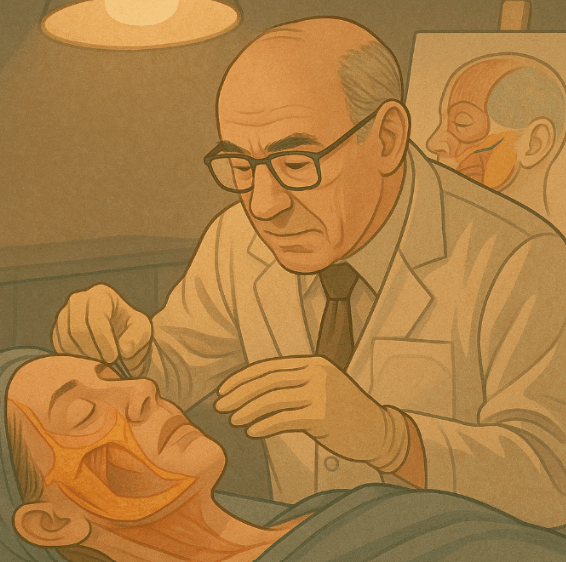
But Dr. Mendelson focused on something different: structures that do not visibly exist.
He paid attention to the empty spaces between tissues.
In other words, he introduced the concept of “anatomical spaces” as safe and efficient pathways through which surgical instruments can pass between one tissue layer and another.Representative examples include the prezygomatic space, premasseter space, and premaxillary space.
These spaces occupy extremely important positions in facelift surgery.
Only when the surgeon understands their exact location and boundaries can effective dissection be performed without unnecessary bleeding or nerve injury.
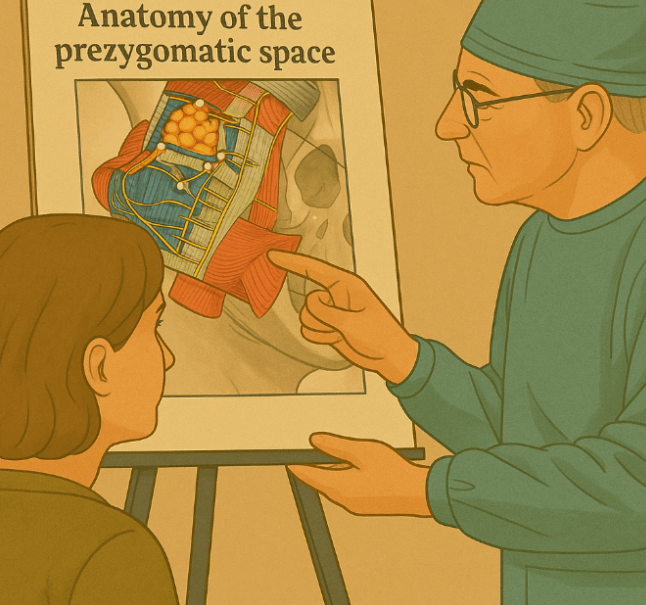
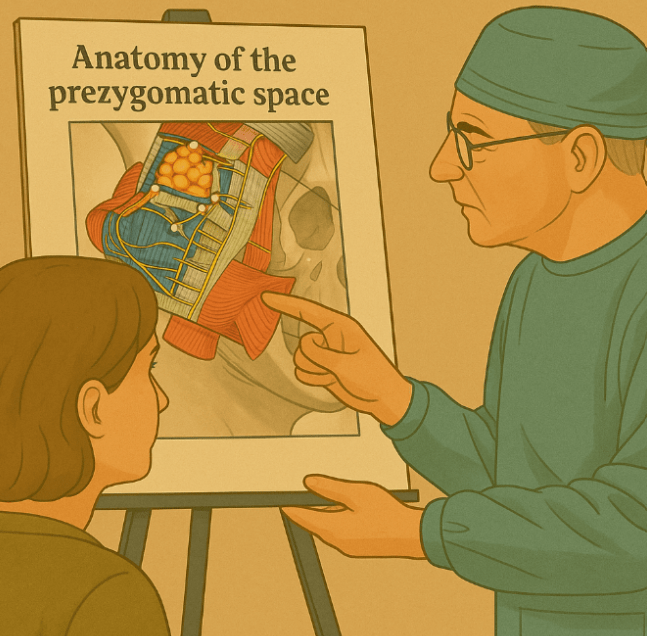
To give just one example, the prezygomatic space is an empty anatomical space located just above the cheekbone, allowing the muscles around the eye to glide smoothly.
It is also one of the anatomical factors involved in the formation of the Indian crease, or Indian band.
Dr. Mendelson was the surgeon who systematically described the existence and structure of this space from a surgical perspective. Although it is not visible from the outside, once aging begins, this space can collapse, leading to problems such as midface descent, deepening of the Indian crease, and worsening of the Indian band.
So why is this space important?
Because during surgery, it serves as an anatomical safe zone where the surgeon can carefully pass between the skin and the SMAS layer and reposition the deeper tissues.
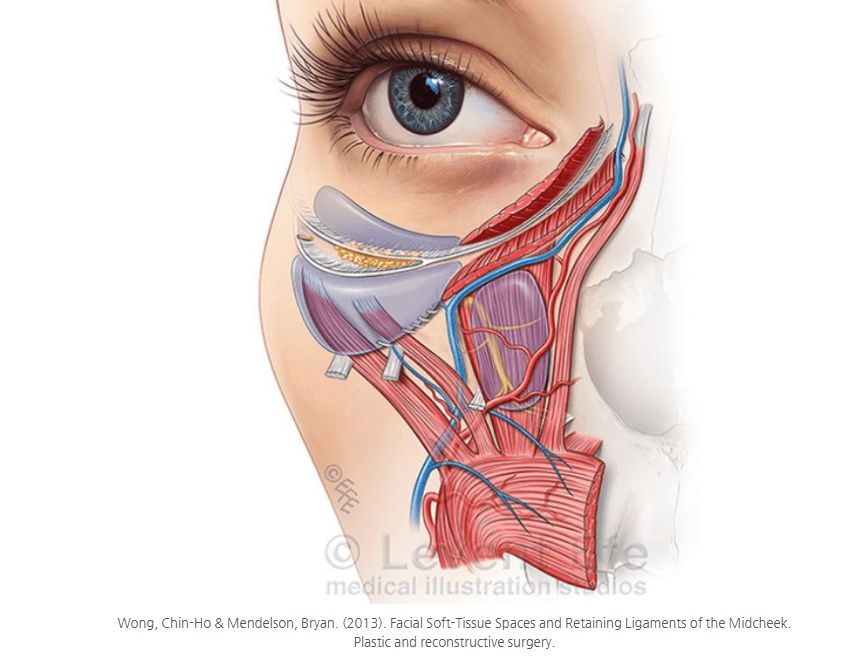
When the surgeon enters this space precisely while avoiding the nerves and blood vessels, the lifting effect can be maximized without forcibly destroying important structures.That is why the concept of this small space helped establish the standards of modern facelift surgery.
Thanks to this concept, the direction of surgery changed from the old approach of indiscriminate dissection to a more precise operation—one in which the surgeon knows exactly where to go and how to get there.
In this process, the surgery actually becomes smoother. Because the dissection advances through an “empty space,” anatomically important structures can be preserved, while direct tension on the skin is minimized. As I have explained in previous posts, this is an extremely important concept.
From the surgeon’s perspective, this approach does take time to master, because it requires the ability to recognize and navigate anatomical spaces.
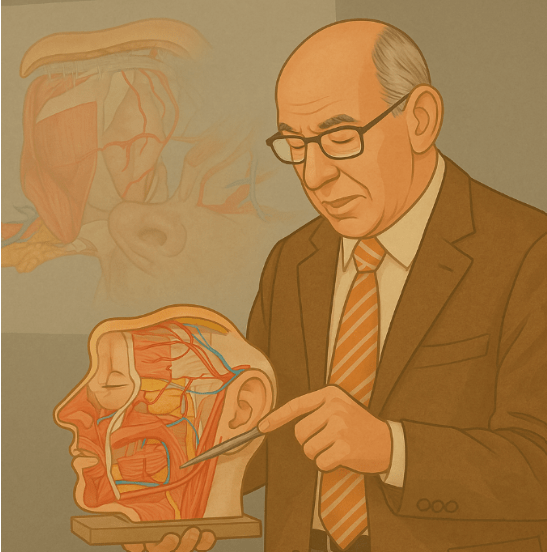
However, a facelift is not simply a surgery that pulls tissues upward. It can be understood as a procedure that reorganizes and restores the facial structures closer to the way they were in youth. And the key to that reorganization ultimately depends on how accurately the surgeon understands these anatomical spaces.
I hope you found the story of Dr. Mendelson interesting.
In the next post, I will return with a slightly lighter topic.